

Table of Contents
- The hidden warehouse hazard lurking at the pallet transfer zone
- Deconstructing the puncture mechanics of wood splinters on woven polymers
- Why extreme abrasion and puncture resistance is your frontline floor defense
- Eliminating conveyor roller snags through rigid perimeter structural seams
- Scaling production volume safely within a 12000 square meter facility base
- How 400 plus seasoned technicians eliminate structural batch variance
- Protecting corporate reputation with uncompromised BSCI and ISO compliance
- Accelerating terminal throughput with high-clarity non-clouding tracking windows
- Eliminating active lane congestion using high-density foldable architecture
- Securing your peak season infrastructure with a tenured Guangzhou exporter
The hidden warehouse hazard lurking at the pallet transfer zone
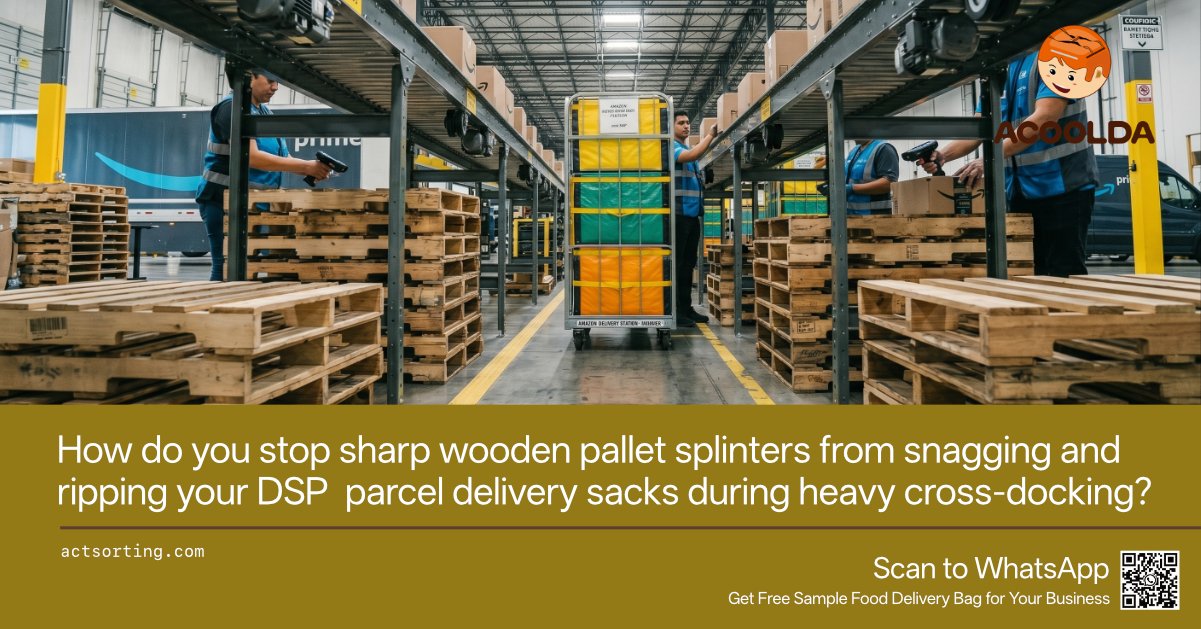
In a high-volume European or North American cross-docking facility, the transition from international air pallets to local sortation lines is a frantic race against the clock. The primary operational hazard during this rapid transfer is not the speed of your conveyor belts, but the physical condition of the wooden pallets holding your inbound cargo. Over weeks of heavy usage, these pallets develop rough edges, exposed nails, and long, razor-sharp wood splinters. When a standard commercial shipping bag is pulled, slid, or yanked off a damaged pallet face under the weight of hundreds of e-commerce parcels, those splinters act like hooks, catching the fabric strands and ripping the bottom completely open. We established our manufacturing operations back in 2013 under the ACTSORTING brand because we watched terminal managers handle the costly fallout of these sudden fabric failures. Our mission has always been to build rugged, industrial-grade hardware that neutralizes these everyday warehouse hazards.
Deconstructing the puncture mechanics of wood splinters on woven polymers
The mechanical breakdown of low-grade logistics bags on the floor comes down to a failure in textile density. Standard commercial sacks or thin plastic totes are loosely woven, meaning there are microscopic gaps between the individual horizontal and vertical threads. When the sack encounters a sharp, jagged wooden splinter under a heavy payload, the wood point easily wedges itself between the loose strands. As the worker pulls the bag forward, the splinter pushes the threads apart, turning a tiny snag into a massive, jagged tear that dumps internal packages across your busy receiving lanes. We address this structural vulnerability by choosing premium, ultra-dense high-tenacity industrial polymers. This tightly bound weave pattern leaves zero room for foreign points to penetrate, forcing wood splinters to slide harmlessly underneath the fabric face instead of catching and tearing the structural weave.
Why extreme abrasion and puncture resistance is your frontline floor defense
To guarantee your equipment survives the brutal physical environment of a cross-docking terminal, the entire base panel must be engineered for continuous friction and impact. Our development team focuses heavily on extreme abrasion resistance, finishing our Parcel Delivery Bag models with a proprietary high-durability coating. This specialized outer layer smooths the fabric face, lowering the friction coefficient against rough concrete floors, metal sorting chutes, and splintered wooden pallets. By reinforcing the bottom of our parcel sorting sacks against external punctures and intense surface rubbing, we eliminate the need for handlers to carefully lift every single load. Your ground crews can slide, drag, and move heavy gear at top speed during peak dispatch hours without risking a sudden bottom blowout or damaging expensive customer packages inside.
Eliminating conveyor roller snags through rigid perimeter structural seams
While external toughness protects the bag from pallet damage, dimensional discipline is what keeps it moving smoothly through your automated sortation tracks. If a flexible sack sags deeply, loses its shape, or stretches out unevenly when loaded with heavy Last-Mile Delivery Totes, it transforms into an immediate line hazard. Sagging fabric easily gets pinched between moving rollers or blocks automated optical sortation sensors, causing a system-wide emergency shutdown. We solve this geometric issue by prioritizing strict perimeter seam engineering. We stitch multi-layered, reinforced seams along all eight corners of the bag’s structure, creating a self-supporting internal tension frame. This engineering choice forces the bag to maintain a predictable, blocky profile with an absolutely flat bottom, keeping the material safely elevated above conveyor mechanisms.
Scaling production volume safely within a 12000 square meter facility base
When an enterprise logistics network expands its regional distribution footprint, procurement directors cannot afford to gamble on a manufacturing partner operating out of a cramped workshop. If your supplier lacks physical space, a sudden volume increase before the winter holiday rush will trigger severe production bottlenecks and delayed shipments. Our expansive 12,000 square meter production facility in Yangchun delivers the raw industrial scale required to guarantee your supply continuity. This highly organized complex allows us to run multiple large-scale commercial lines in parallel, isolating our raw material preparation, heavy-duty stitching, multi-stage quality control, and compressed baling into highly efficient zones that keep your delivery timelines completely predictable.
How 400 plus seasoned technicians eliminate structural batch defects
While advanced automated cutting machinery provides an incredibly precise layout for our fabric panels, the complex structural stitching of an industrial sorting bag still demands deep human expertise. Automated sewing machines cannot feel variations in textile thickness or adjust thread tension on a multi-layered reinforced corner across a massive production run. The ACTSORTING facility relies on a dedicated, stable workforce of over 400 skilled technicians who bring years of specialized industrial sewing experience to our lines. They double-stitch and cross-reinforce every single weight-bearing handle, strap joint, and edge corner, providing continuous human oversight that catches minor weave inconsistencies before the bags are baled and shipped to your terminal gates.
Protecting corporate reputation with uncompromised BSCI and ISO compliance
Sourcing equipment for top-tier Western logistics operations and strict Amazon warehouse networks means operating under absolute transparency and compliance. You cannot risk your facility’s daily throughput, face sudden customs hold-ups, or open your corporate brand up to severe legal liability by working with unverified factories that fail basic ethical or quality audits. Our entire manufacturing infrastructure is fully backed by BSCI and ISO9001 certifications, providing an absolute third-party guarantee of fair wages, safe working conditions, and systematic quality tracking. When your corporate compliance officers audit our operational history, they find a clean, highly organized industrial ecosystem that satisfies your strictest vendor procurement requirements, making your internal onboarding process smooth and effortless.
Accelerating terminal throughput with high-clarity non-clouding tracking windows
Shaving valuable seconds off your cross-docking processing times requires examining how your personnel and automated scanning hardware interact with your equipment. If your high-speed overhead cameras encounter a scratched, blurry, or wrinkled plastic label pocket, the system cannot verify the destination barcode, kicking the unit into an exception lane. We address this common daily bottleneck by building heavy-gauge, completely non-clouding transparent label slots directly onto the exterior face of our Courier Sorting Totes. We use a high-clarity polymer that resists scratching, moisture, and industrial dust buildup, ensuring that routing labels stay flat and dry. This allows your optical scanning infrastructure to read tracking data instantly in a single pass, completely eliminating manual re-scanning delays.
Eliminating active lane congestion using high-density foldable architecture
Floor space is the most valuable currency inside a high-throughput distribution center, and empty equipment should never clog your active processing lanes or inbound receiving docks. Rigid plastic bins and crates are notoriously inefficient when empty, consuming massive amounts of cubic space while sitting idle on your floor. Our flexible, foldable Van Loading Totes solve this structural waste by collapsing completely flat into a razor-thin profile when they are not actively moving parcel volume. This smart spatial design allows facility managers to stack hundreds of empty units into a tight corner, keeping walking lanes clear. This lightweight, space-saving logic also lowers your reverse logistics costs, enabling cross-docking hubs to ship empty bags back to main induction centers in highly dense, economical loads.
Securing your peak season infrastructure with a tenured Guangzhou exporter
Reflecting on more than ten years of manufacturing growth since our founding in 2013, ACTSORTING has established its position as a core international supplier by focusing on the real-world performance of our products on the sorting floor. We have spent a decade listening to facility directors, refining our weave densities, and upgrading our heavy-duty closures to survive the most punishing logistics loops on earth. Operating out of the industrial network of Guangzhou gives us an exceptional logistical advantage, allowing us to source premium raw materials and coordinate reliable global shipping with ease. When you choose to partner with us, you are securing a transparent, reliable supply chain that will support your facility’s processing volume for years to come.
FAQs
Q: How do your bags resist being ripped open by sharp wooden pallet splinters?
A: We engineer our parcel sorting sacks with ultra-dense, high-tenacity industrial weaves and thick protective coatings that leave zero structural gaps, forcing wood splinters to slide underneath the fabric face without catching or tearing the strands.
Q: Can the base dimensions be altered to match our existing air cargo pallet configurations?
A: Yes, we provide complete 100 percent customization, allowing you to specify the exact height, width, depth, and handle placements needed to maximize the space on your specific pallet networks or van loading totes.
Q: Will the clear tracking pockets withstand constant scuffing against industrial warehouse pallets?
A: Absolutely. We utilize a heavy-gauge, scratch-resistant polymer for our Courier Sorting Totes that resists clouding and scuffing, ensuring your automated scanning systems can read barcodes clearly over long-term use.
Q: How does your factory ensure identical quality across an order of thousands of custom bags?
A: Our 12,000 square meter complex utilizes automated laser cutting combined with continuous quality tracking by our 400 plus skilled technicians to eliminate batch variance entirely.
Q: Are your manufacturing facilities audited regularly for ethical labor and safety standards?
A: Yes, our entire production base maintains full BSCI and ISO9001 compliance, providing transparent, verified third-party documentation covering fair wages, safe working conditions, and systematic quality management.