

Table of Contents
- Why Are Returns Becoming a Bigger Problem for Parcel Delivery Networks?
- What Happens When Failed Deliveries Are Not Sorted Properly?
- How Can Parcel Delivery Bags Separate Outbound and Return Parcels?
- Why Do Reverse Logistics Totes Need Better Label Visibility?
- How Can Courier Sorting Totes Reduce Confusion in Return Areas?
- What Makes Durable Parcel Sorting Sacks Useful for Daily Returns?
- How Do Foldable Bags Save Space After Delivery Routes?
- Why Does OEM Customization Matter for Return Logistics?
- What Should Buyers Check Before Ordering Return Parcel Bags?
- How Can ACTSORTING Support Bulk Orders for Reverse Logistics?
Introduction
Returns are no longer a small side job in parcel delivery.
For many e-commerce warehouses, courier companies, and last-mile delivery networks, return logistics has become a daily operational headache. Customers reject parcels. Drivers bring back failed deliveries. Wrong-address packages return to the depot. Damaged boxes need to be separated. Some parcels require re-delivery, some go back to the seller, and some need inspection before they can move again.
It sounds simple from the outside. In real warehouses, it is not.
At the end of a delivery route, drivers often return with a messy mix of failed delivery parcels, customer returns, damaged items, refused orders, and empty delivery equipment. If the return area does not have a clear sorting system, parcels can be misplaced, rescanned late, or mixed with outbound shipments. That creates extra labor, delayed refunds, wrong re-deliveries, and a lot of quiet warehouse frustration, the kind that makes supervisors stare at a pile of parcels like it personally betrayed them.
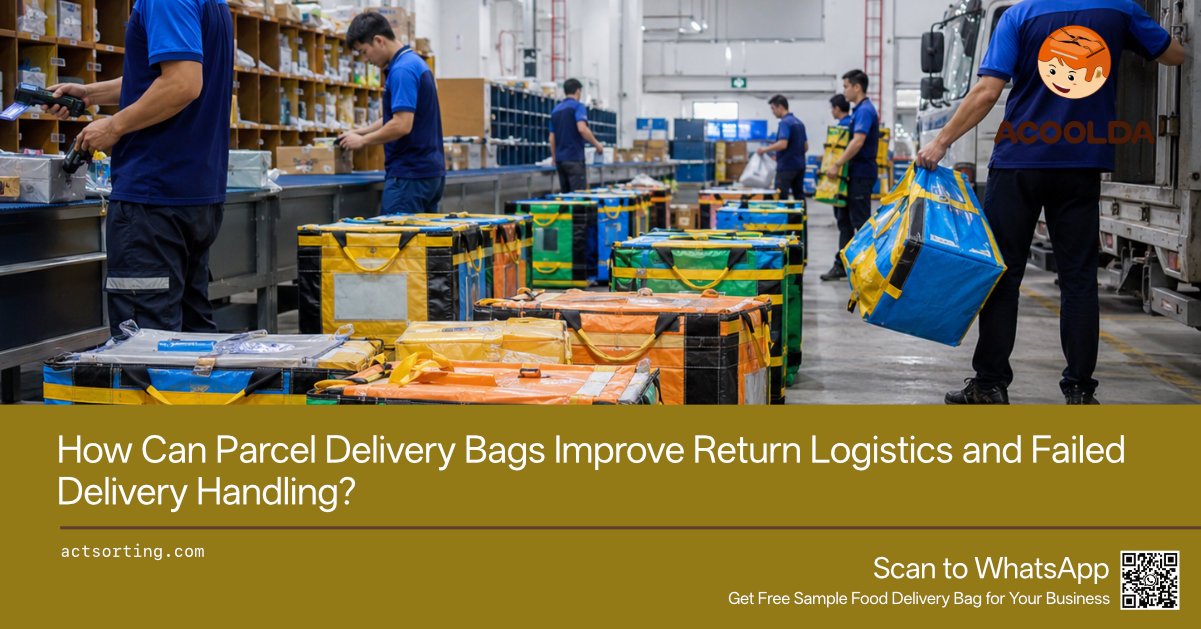
This is where a well-designed Parcel Delivery Bag becomes more than a carrying tool. It becomes a return sorting unit, a failed delivery container, a reverse logistics tote, and a practical way to keep warehouses organized after routes are completed.
ACTSORTING has manufactured industrial logistics bags since 2013. From a 12,000+ square meter factory in Yangchun, Guangdong, China, supported by more than 400 skilled workers, the company supplies Parcel Delivery Bags, Last-Mile Delivery Totes, Parcel Sorting Sacks, Courier Sorting Totes, Van Loading Totes, and DSP Delivery Supplies for parcel delivery companies, e-commerce fulfillment centers, courier networks, postal operators, and delivery stations across Europe and North America.
With BSCI and ISO9001 certification, ACTSORTING supports OEM & ODM customization, including fabric material, bag size, color, closure method, transparent label holder, logo printing, handle placement, reinforcement structure, and large-volume production for business customers.
1. Why Are Returns Becoming a Bigger Problem for Parcel Delivery Networks?
E-commerce has made buying easier, which naturally means it has also made returning easier. Humanity invented one-click shopping and then acted surprised when warehouses filled up with unwanted shoes, wrong-size jackets, duplicate orders, and customers who changed their minds after the courier already crossed half the city. Beautiful system, truly.
For logistics operators, returns are costly because they move against the clean direction of the delivery flow. Outbound parcels usually follow a planned sequence: warehouse, sorting, staging, loading, delivery. Return parcels behave differently. They come back from many routes, at different times, in different conditions, and with different next steps. Some need re-delivery. Some need customer service review. Some need to go back to the seller. Some need damage inspection.
Without proper physical organization, return logistics quickly becomes messy. Drivers may unload failed delivery parcels into the same area as empty bags. Customer returns may sit beside outbound packages. Warehouse workers must manually identify, separate, and scan everything again. Even small confusion can create delays in refund processing or re-delivery scheduling.
A dedicated Parcel Delivery Bag system helps separate return categories before they become warehouse clutter. For example, Last-Mile Delivery Totes can be color-coded for failed delivery, customer return, damaged goods, and re-delivery. Transparent label holders can show route number, driver ID, return category, or scan batch information. Foldable Parcel Sorting Sacks can be stored easily when not in use and deployed quickly during peak return seasons.
ACTSORTING designs Parcel Delivery Bags for this kind of real operating pressure. Strong woven materials support repeated use, reinforced handles make it easier to move returned parcels, and custom label pockets improve visibility across the return workflow.
Returns are not disappearing. If anything, they are becoming part of the normal daily rhythm of modern parcel logistics. The question is whether your operation treats them as controlled flow or lets them become a second warehouse mess after the delivery day ends.
2. What Happens When Failed Deliveries Are Not Sorted Properly?
Failed deliveries are small problems until they multiply.
One customer is not home. One address is incomplete. One parcel is refused. One driver cannot access a building. These cases seem normal during delivery operations. But when hundreds of failed deliveries return to a depot every afternoon, the return process can quickly become a bottleneck.
If failed delivery parcels are not separated clearly, workers must spend extra time identifying them later. Some may be mixed with normal returns. Some may be placed in the wrong re-delivery area. Some may sit unprocessed until the next day. In courier operations, this delay can affect service-level performance and customer satisfaction.
A misplaced failed delivery parcel also creates scanning problems. If the parcel is not updated correctly in the system, customer service may not know whether it should be reattempted, returned to sender, or held for pickup. The physical parcel and digital tracking record begin drifting apart. That is when logistics teams enter the charming little swamp known as “Where is this package, actually?”
Parcel Delivery Bags can reduce this problem by making failed delivery handling visible and structured. A dedicated bag color or printed marking can identify failed delivery parcels immediately. A transparent label holder can carry route information, failed delivery reason codes, or driver notes. Courier Sorting Totes can be assigned to specific return categories so workers do not need to guess what each parcel group represents.
ACTSORTING can manufacture Parcel Sorting Sacks and Courier Sorting Totes with customized colors, large document windows, reinforced handles, secure closures, and printed instructions. These features help workers quickly separate failed deliveries from regular returns, outbound parcels, or empty equipment.
For logistics companies operating large delivery networks, this improves both physical workflow and tracking accuracy. Parcels move through the correct return process faster. Drivers unload more clearly. Warehouse teams spend less time re-sorting. Customers receive more accurate updates.
Failed delivery will always exist. Bad access codes, rainy days, absent customers, and mysterious apartment entrances are apparently eternal. But poor failed-delivery sorting does not need to be eternal too.
3. How Can Parcel Delivery Bags Separate Outbound and Return Parcels?
One of the easiest ways to create warehouse confusion is to let outbound parcels and return parcels share the same physical space without clear separation. It seems harmless for a few minutes. Then suddenly, workers are asking whether a package is going out, coming back, waiting for re-delivery, or destined for inspection. Very efficient, if the goal is to create a live-action puzzle.
A well-designed Parcel Delivery Bag helps prevent this by creating clear physical categories. Instead of leaving returned parcels loose on carts, floors, or staging tables, warehouses can place them directly into dedicated return bags. These bags can be separated by color, label, route, customer type, or return reason.
For example, a courier depot may use blue Last-Mile Delivery Totes for outbound delivery, gray Parcel Sorting Sacks for failed delivery, red Courier Sorting Totes for damaged parcels, and yellow Van Loading Totes for next-day re-delivery. This visual difference helps workers understand parcel status quickly, even during busy unloading periods.
The bag structure also matters. Return parcels may include damaged boxes, irregular shapes, or items that were handled multiple times during the route. A strong Parcel Delivery Bag with reinforced woven fabric and reliable stitching helps contain these parcels safely while they move through the reverse logistics process.
ACTSORTING supports custom bag sizes based on return volume and warehouse layout. Smaller totes may be better for category separation, while larger Parcel Sorting Sacks may work better for high-volume return collection. Transparent label holders can be added for return batch cards, route tags, driver IDs, barcode sheets, or inspection notes.
Closure methods can also be customized. Open-top bags allow fast unloading. Hook-and-loop closures keep parcels covered while still allowing quick access. Zippers provide better containment when bags move between facilities.
By separating outbound and return parcels physically, logistics teams reduce scanning mistakes, improve warehouse visibility, and make return processing easier to manage. The bag becomes a simple but powerful control point inside a complicated operation.
4. Why Do Reverse Logistics Totes Need Better Label Visibility?
Return logistics depends heavily on correct information.
A parcel coming back to the warehouse is not just “a return.” It may be a failed delivery, customer rejection, damaged item, wrong address, refused COD parcel, seller return, re-delivery candidate, or inspection-required package. Each category needs a different next step. If workers cannot identify the category quickly, the return process slows down immediately.
This is why label visibility is so important for reverse logistics totes.
A transparent label holder turns a Parcel Delivery Bag into an identifiable work unit. Warehouse staff can insert route cards, driver notes, return category sheets, barcode batch labels, inspection tags, or destination instructions. The information stays with the bag as it moves from van unloading to return staging, scanning, sorting, and further processing.
Without visible labels, workers often need to open bags, check parcels manually, or rely on memory. That is not a system. That is a warehouse asking tired people to become detectives after a full shift. Naturally, errors happen.
ACTSORTING can customize transparent label holders in different sizes and positions. Some customers need large A4-style document windows for route sheets. Others prefer smaller barcode card slots. Some require waterproof transparent pockets for outdoor delivery environments. The placement can be adjusted to the front, side, or top of the bag depending on how workers stack and identify the totes.
Color coding can work together with label visibility. A red Courier Sorting Tote may indicate damaged goods, while the transparent card explains route number, driver, date, and processing instruction. A green Parcel Sorting Sack may indicate successful pickup returns, while its label holder carries batch scan information.
This combination of visual category and written information reduces confusion. It helps supervisors check return areas faster. It helps workers move parcels to the correct next station. It helps digital tracking match physical handling.
Reverse logistics is complicated enough already. Clear labels at least prevent the bag from becoming another anonymous blob in the warehouse ecosystem.
5. How Can Courier Sorting Totes Reduce Confusion in Return Areas?
Return areas are often less organized than outbound areas. Outbound operations usually receive more attention because they directly affect delivery departure times. Return processing, meanwhile, often happens later in the day, after drivers return and everyone is already tired. This is exactly when confusion becomes expensive.
Courier Sorting Totes help by creating structured return groups. Instead of one large pile of mixed parcels, teams can separate returns by status, route, driver, product type, damage level, or next action. Each tote becomes a small controlled batch.
For example, one return area could use separate Courier Sorting Totes for re-delivery, customer return, damaged parcel, address issue, seller return, and investigation required. Workers can scan and process each category more efficiently. Supervisors can also see the volume of each problem type at a glance.
ACTSORTING manufactures Courier Sorting Totes with heavy-duty woven materials, reinforced seams, strong handles, foldable structures, and optional closure systems. These details matter because return parcels are not always neatly packed. Some boxes are crushed. Some are taped badly. Some are wet. Some are oversized. A weak bag may deform or tear when handling mixed returns.
Custom tote sizes also help warehouses control category volume. Smaller bags can prevent overloading in sensitive categories such as damaged goods. Larger bags can support high-volume customer returns after promotion periods. Printed markings and transparent label holders make each tote easier to identify in crowded spaces.
The result is not just cleaner warehouse appearance. It improves operational flow. Drivers unload faster because they know where to place parcels. Warehouse teams process returns faster because categories are already separated. Managers understand return causes better because physical sorting supports data collection.
A good Courier Sorting Tote does not solve the emotional drama of returns, sadly. Customers will still buy three sizes and keep none. But it does help the warehouse handle that drama without losing control.
6. What Makes Durable Parcel Sorting Sacks Useful for Daily Returns?
Returns are rough on equipment.
Outbound parcels may be neatly staged and loaded, but returned parcels often come back in worse condition. Boxes are crushed, edges are damaged, labels are torn, and some parcels have already been moved several times. When these items are placed into weak bags, the bags wear out quickly.
Durable Parcel Sorting Sacks are useful because return logistics requires repeated handling every day. Bags are dragged from vans, carried into return zones, stacked near scanning stations, moved to inspection areas, folded after use, and brought out again the next day. This cycle repeats constantly.
ACTSORTING’s Parcel Sorting Sacks are designed for this kind of commercial workload. The woven fabric provides tear resistance and abrasion resistance. Reinforced bottoms help protect the areas most likely to rub against warehouse floors. Strong webbing handles support frequent lifting and dragging. The foldable body allows empty sacks to be stored efficiently when not in use.
For warehouses processing high return volumes, durability directly affects cost. A cheap bag that fails quickly creates replacement expenses, interrupts return processing, and increases waste. A heavy-duty Parcel Delivery Bag lasts longer and maintains a more stable workflow over time.
Different return workflows may need different structures. Open-top Parcel Sorting Sacks work well when fast unloading is the priority. Zippered bags help contain parcels during inter-facility movement. Hook-and-loop closures offer a balance between speed and coverage. ACTSORTING can customize these options based on customer operations.
Daily return handling is not glamorous. It is repetitive, physical, and easy to underestimate. But because it happens every day, small improvements matter. A stronger bag means fewer failures. Clearer labeling means fewer mistakes. Better foldability means cleaner storage. Over months and years, those improvements quietly reduce operating cost.
7. How Do Foldable Bags Save Space After Delivery Routes?
At the end of delivery routes, empty equipment comes back to the depot along with return parcels. If that equipment is bulky, it consumes valuable vehicle and warehouse space. This becomes especially frustrating when vans return with failed delivery parcels, customer returns, and rigid containers all fighting for the same limited room.
Foldable Parcel Delivery Bags solve this problem in a very practical way. When empty, they collapse into a compact shape and can be stacked or bundled easily. Drivers can return more empty bags without filling the van. Warehouses can store large quantities of empty Last-Mile Delivery Totes in a smaller area.
This is useful for both outbound and return logistics. During morning dispatch, bags can be opened and filled quickly. During afternoon return, empty bags can be folded while dedicated return bags remain active for failed deliveries and customer returns. The operation becomes more flexible.
Compared with rigid boxes or plastic bins, foldable Parcel Sorting Sacks are easier to move between facilities during peak periods. If one delivery station faces a return surge after a large sales campaign, extra bags can be shipped or transferred without consuming excessive transport space.
ACTSORTING designs foldable Courier Sorting Totes and Parcel Delivery Bags that balance storage efficiency with durability. The bags must fold easily, but they still need to survive dragging, lifting, loading, and daily warehouse use. Reinforced sewing and durable woven fabrics help maintain long-term performance.
Customization can further improve storage management. Customers may request specific folded dimensions, bundling straps, printed identification, or packaging formats for easy warehouse counting. These details support large logistics teams that need equipment control across multiple depots.
Space savings may sound boring, but warehouse space is never free. Every square meter occupied by empty containers is space not used for active operations. Foldable bags reduce that waste, which is the closest logistics gets to magic without involving yet another software dashboard.
8. Why Does OEM Customization Matter for Return Logistics?
Return logistics is not one workflow. It is many workflows pretending to be one.
A fashion e-commerce warehouse may receive high return volumes with light parcels. A courier company may handle failed delivery parcels from mixed categories. A postal operator may need route-based return sacks. A large retailer may separate damaged goods from sellable returns. A cross-border logistics company may require customs-related return sorting.
One standard Parcel Delivery Bag cannot fit all these needs perfectly.
That is why OEM customization matters.
ACTSORTING supports custom fabric selection, including PP woven materials, laminated woven fabrics, polyester blends, coated fabrics, and reinforced bottom materials. Customers can choose fabric based on expected load, friction level, weather exposure, and product lifespan requirements.
Size customization allows bags to match return stations, van compartments, warehouse shelves, pallet systems, or scanning tables. Color customization supports category separation. Logo printing improves brand consistency. Transparent label holders keep return information visible. Closure methods can be selected according to speed, security, and transportation needs.
Handle placement and webbing strength are also important. Return bags may be dragged more than lifted, or lifted from vans into depots repeatedly. ACTSORTING can adjust strap positions to match how workers actually move the bags.
For ODM projects, ACTSORTING can help customers develop new reverse logistics tote designs from operational problems. For example, if damaged parcels are often mixed with normal customer returns, a customer may need a red reinforced Courier Sorting Tote with a large label holder and secure closure. If failed deliveries need to be reloaded the next morning, a dedicated Van Loading Tote system may be more suitable.
Customization is not decoration. It is how a bag becomes part of the process instead of just another object in the warehouse pile.
9. What Should Buyers Check Before Ordering Return Parcel Bags?
When buying return parcel bags, procurement teams should look beyond basic size and price. Returns create different pressure from outbound delivery, so the bag must be designed for mixed parcel conditions, repeated handling, visible classification, and easy storage.
The first thing to check is material strength. Return parcels may have damaged packaging, sharp edges, or irregular shapes. A weak fabric may tear faster than expected. ACTSORTING offers durable woven materials and reinforced options for daily commercial use.
The second factor is identification. Return categories must be easy to recognize. Buyers should consider transparent label holders, color-coded bodies, printed category names, barcode card pockets, and route card slots. These features help workers avoid mixing failed deliveries, customer returns, damaged goods, and re-delivery parcels.
The third factor is closure method. Open-top bags are fast for unloading. Hook-and-loop closures are practical for repeated access. Zippers offer stronger containment when bags move between facilities. The best choice depends on the return workflow.
The fourth factor is factory capacity. A supplier may produce a nice sample but fail during bulk production. ACTSORTING operates a 12,000+ square meter factory with over 400 workers, supporting customized large-volume orders and repeat procurement programs.
Certification is also important for international buyers. ACTSORTING holds BSCI and ISO9001 certification, supporting responsible manufacturing and quality management. This helps customers reduce supplier risk when ordering from overseas.
Finally, buyers should check whether the supplier understands logistics. A general bag manufacturer may focus only on sewing. A logistics bag manufacturer should understand sorting, routing, van loading, returns, abrasion, labeling, and operational efficiency. That difference shows up in the final product, usually after the cheap option has already started falling apart.
10. How Can ACTSORTING Support Bulk Orders for Reverse Logistics?
ACTSORTING supports business customers that need reliable Parcel Delivery Bags, Parcel Sorting Sacks, Courier Sorting Totes, Last-Mile Delivery Totes, Van Loading Totes, and DSP Delivery Supplies for both outbound and return logistics.
Since 2013, the company has focused on industrial logistics textile products. Its factory in Yangchun, Guangdong covers more than 12,000 square meters and employs over 400 experienced workers. With BSCI and ISO9001 certification, ACTSORTING provides stable production, quality control, customization support, and export service for customers across Europe and North America.
For reverse logistics projects, ACTSORTING can help customers design bag systems for failed delivery, customer returns, damaged parcels, re-delivery sorting, seller returns, and warehouse inspection workflows. Custom options include fabric material, GSM weight, bag dimensions, color coding, logo printing, transparent label holders, printed category markings, closure systems, reinforced bottoms, handle placement, folding style, packaging method, and carton labeling.
Bulk order support is especially important for large delivery networks. Return operations often expand during peak seasons such as Black Friday, Christmas, Prime Day, or major online promotions. ACTSORTING can support production planning, sample development, volume manufacturing, and repeat order consistency so customers do not face equipment shortages when return volume increases.
The company’s OEM & ODM process helps customers move from concept to sample to mass production with practical communication and clear manufacturing control. Whether your team needs a simple custom Parcel Delivery Bag or a complete return logistics tote system, ACTSORTING can develop products around your real workflow.
If your warehouse is struggling with messy return areas, mixed failed deliveries, unclear parcel categories, or high bag replacement rates, ACTSORTING can help build a more organized reverse logistics solution. Send your required size, material preference, expected load, return category system, logo artwork, and target quantity to receive a customized proposal.
FAQ
Q: Can Parcel Delivery Bags be used for return logistics?
A: Yes. Parcel Delivery Bags are highly suitable for return logistics when designed with clear labels, durable materials, reinforced handles, and category-based colors. They help warehouses separate failed deliveries, customer returns, damaged goods, and re-delivery parcels more efficiently.
Q: What is the difference between outbound bags and return parcel bags?
A: Outbound bags are usually designed for route delivery and van loading, while return parcel bags often need stronger category identification, better label visibility, and durable structures for mixed parcel conditions. ACTSORTING can customize both types based on customer workflow.
Q: Can ACTSORTING customize bags for failed delivery handling?
A: Yes. ACTSORTING can customize colors, printed markings, transparent label holders, bag size, closure systems, handle placement, and reinforced structures for failed delivery sorting and re-delivery workflows.
Q: Are foldable Parcel Sorting Sacks useful for reverse logistics?
A: Yes. Foldable Parcel Sorting Sacks save warehouse and vehicle space when empty, making them practical for delivery stations that need to manage return parcels and empty equipment at the same time.
Q: Why choose ACTSORTING for reverse logistics bag manufacturing?
A: ACTSORTING has focused on logistics bags since 2013 and operates a 12,000+ square meter factory with over 400 workers. With BSCI and ISO9001 certification, OEM & ODM customization, and large-volume production capability, the company supports reliable return logistics bag projects for global customers.